What the alarm is telling you
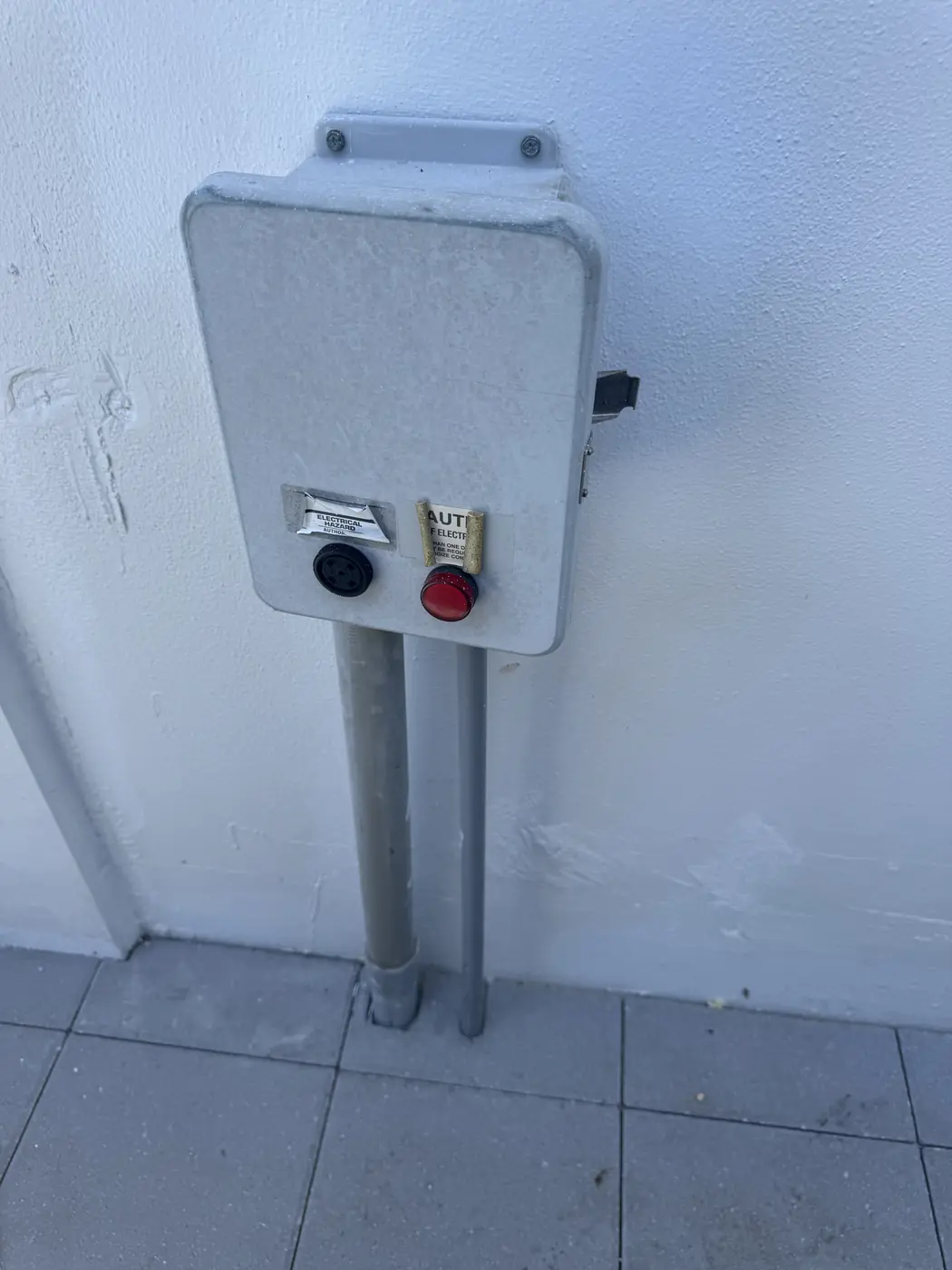
A conventional gravity septic system has no alarm. You have one because your system uses a pump tank (also called a dosing tank or lift station) or an aerobic treatment unit (ATU). Florida rule 62-6.013 requires pump tanks to have an audio and visual high water alarm in a conspicuous location to warn of pump failures. The rule also says the alarm must trip before the liquid rises above the tank's inlet pipe. For ATUs, rule 62-6.012 requires a visual and audio warning device that alerts the people in the house to a malfunction or failure of the unit.
Texas A&M AgriLife Extension describes a typical pump tank: a pump, an on/off float that runs it, and a separate high-water alarm float. When the liquid rises above the on float, the alarm sounds. Washington's Department of Health lists the usual causes:
- A tripped breaker or blown fuse on the pump circuit.
- A pump or float switch that has come unplugged.
- A float tangled in a cord or rope, or debris holding the pump off.
- A worn-out or failed pump.
- Too much water at once, such as a laundry marathon or a running toilet, which EPA says can add as much as 200 gallons a day.
- A power outage, since wastewater keeps collecting while the pump is off.
What to do right now
Work through these steps in order. None of them requires opening the tank. Texas A&M recommends putting the alarm on a circuit separate from the pump, so the alarm can sound even when the pump has no power.
- Press the silence or test button. On SJE Rhombus Tank Alert alarms, this stops the horn, but the red light stays on until the problem is fixed, and the alarm then resets by itself. Silencing the horn does not fix anything.
- Stop using water. Hold off on laundry, the dishwasher, baths and long showers. Every drain feeds the tank, and the reserve space above the alarm level is limited.
- Check the breaker for the septic pump, but only if the panel and the ground around you are dry. If it has tripped, reset it once. If it trips again, leave it off and call for service, since a breaker that keeps tripping points to a problem with the pump or wiring.
- Watch the light. If the pump runs again, the light should go out on its own. Have the system checked anyway.
- If the light stays on, call a septic professional. If you have an ATU, call the maintenance company named on your service contract first.
Why it goes off after heavy rain
UF/IFAS Extension explains that heavy rain and rising groundwater can saturate the soil so the drainfield cannot absorb effluent. On a pumped system, the pump sends effluent to a drainfield that cannot take it, so the tank level can climb.
Water can also get into the tank from outside. Florida rule 62-6.013 requires septic tanks and risers to be watertight, with the joints between a riser and the tank sealed, and Texas A&M notes that a pump tank must be watertight so groundwater cannot get in. A cracked tank, a riser that has separated from the tank or a loose lid can let in groundwater or runoff during wet spells. If your alarm only goes off during storms, have the tank, risers and lids checked for leaks.
During and after heavy rain, UF/IFAS advises limiting water use and keeping vehicles off the drainfield, since compacted soil absorbs even less water. It also warns against pumping a tank while the soil is still saturated, because the tank can float out of the ground. Florida DEP recommends pointing downspouts and other water sources away from the tank and drainfield.
Floats, pumps and aerobic units: leave the hands-on work to a pro
Stuck or tangled floats are on Washington's list of causes, but freeing them is not a homeowner job. Washington's health department says never to enter a pump chamber, because the gases inside are poisonous and the lack of oxygen can be fatal. It also says to turn off the power at the breaker and unplug all power cords before anyone handles the pump or floats. Texas A&M adds that these gases also corrode electrical connections.
Pumped systems need more attention than a gravity system. EPA says systems with electrical float switches, pumps or mechanical parts should generally be inspected once a year. Texas A&M also suggests testing the alarm regularly if your panel has a push-to-test button.
ATUs come with their own Florida requirements. Rule 62-6.012 makes a current maintenance contract with an approved maintenance entity a condition of the system's approval. Under the rule:
- A residential ATU must be inspected by the maintenance entity at least twice a year, and a commercial unit four times a year.
- The maintenance entity must be able to respond within 36 hours after being notified that an emergency repair is needed.
- No treatment component may be bypassed or removed after the system's final approval.
When it is an emergency, and what not to do
Call right away, day or night, if any of these happen: sewage is backing up into tubs, showers or floor drains; wastewater is coming up around the tank lid or in the yard; the pump breaker trips again after one reset; or the control panel, outlet or wiring is wet, under water or smells burnt. Keep children and pets away from any wet area that could be sewage, and do not touch a wet panel.
Avoid these common mistakes:
- Opening the tank or leaning into a riser to look at the floats. The gases can kill.
- Running water to see whether the alarm comes back. Each gallon uses up reserve space.
- Unplugging or disconnecting the alarm. Florida requires it, and without it the next sign of trouble may be a backup in the house.
- Ignoring an alarm that cleared on its own. The cause is still there.
- Pumping the tank while the ground is saturated, unless a professional calls for it.
What LCI does on an alarm call
LCI Plumbing & Septic answers calls with live dispatch 24/7, including for homes on pumped systems in Jupiter Farms, The Acreage, Loxahatchee and Wellington. A technician checks the pump circuit, floats and pump, and looks for why the level rose. LCI runs its own vacuum trucks if the tank needs to be lowered, and uses drain cameras when the problem may be in the line from the house. You get a price before work begins.
If your system is an ATU under a maintenance contract, call the maintenance entity on that contract first, since Florida's rule requires them to handle emergency repairs. For anything else, call LCI at (561) 970-9282.