A home inspection can skip the septic and the well
Florida's Standards of Practice for home inspectors cover the visible plumbing inside the house: supply piping, drain-waste-vent lines and the water heater. The same rule says the inspector is not required to inspect private waste disposal systems or wells, or to judge water quality or quantity. On a lot in Jupiter Farms, The Acreage or Loxahatchee, that means the septic system and any well can be left out entirely, and the inspector does not even have to tell you whether the house is on septic or sewer.
A septic inspection for a home sale is voluntary in Florida. DEP's Rule 62-6.001(5) treats a buyer's evaluation as a voluntary inspection, and the state procedure it relies on is titled the Procedure for Voluntary Inspection. The Florida Department of Health also says the state has no requirement to sample a private well when a home is sold. EPA notes that a lender or local government may require an inspection, so ask your lender early. If neither requires one, nothing will prompt it, so schedule it yourself in the first days of the inspection period.
What the state inspection procedure includes
Florida's Procedure for Voluntary Inspection and Assessment of Existing Systems, issued by the Department of Health in May 2000 and now posted by DEP, is meant as the minimum standard whenever this kind of inspection is done. Under DEP Rule 62-6.001(5), only a registered or master septic tank contractor, a state-licensed plumber or a certified environmental health professional can perform it (health department staff cannot), and they must give you a copy of the procedure and written notice that you can request all or part of it.
The rule describes the inspection as a snapshot of the system's condition, not a code-compliance check. It does not cover aerobic treatment units or performance-based systems, which are evaluated by the approved maintenance entity that services them. For any other system, unless you waive parts in writing, the procedure includes these steps:
- Pumping the tank to confirm its capacity. This can be waived only if a pumping, permitted installation or permitted repair in the past three years is documented with the tank size and a statement that it is not a sanitary nuisance.
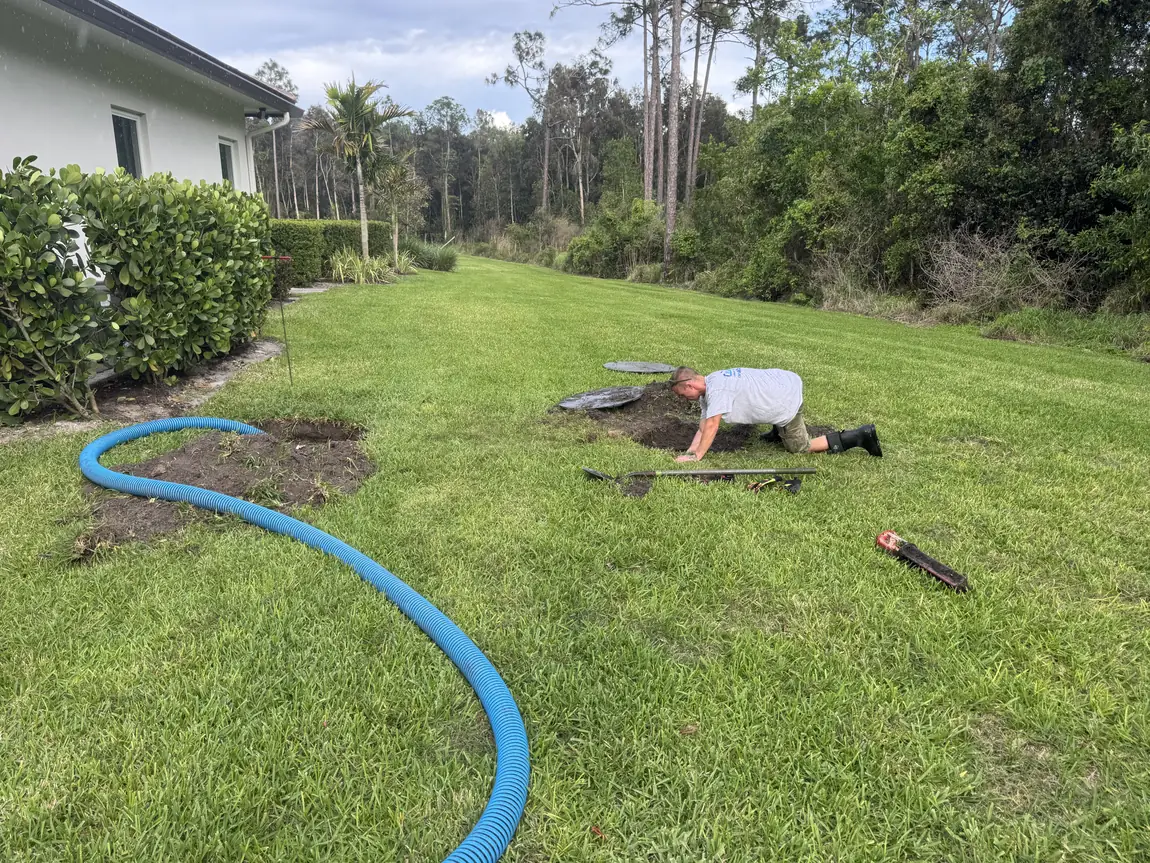
- Inspecting the empty tank for cracks and leaks, and checking baffles, tees, outlet devices, effluent filters and lids.
- Probing the drain field to find its location and approximate size.
- Augering the soil to estimate the seasonal high water table.
- Where the system has a pump tank or alarm: checking the dosing tank, pump operation, the check valve's purge hole, the high-water alarm and its electrical connections.
What the written report must tell you
You and the owner get a signed written report, and the cover must say whether the system is a sanitary nuisance in the inspector's opinion. The report must disclose tank or lid defects, missing or damaged parts, signs of past failure, ponding in the drain field, downspouts aimed at the system and site conditions that could limit a future repair. If the inspector's soil auger puts the seasonal high water table at or above the drain field's elevation, the report must say that raises the chance of malfunction.
Ask the inspector to note any low water in the tank (a possible leak) or staining above the outlet pipe (past backups). Do not lift a tank lid yourself. Tank gases are toxic and an open tank is a fall hazard.
LCI Plumbing & Septic (Florida Certified Plumbing Contractor CFC1427175) handles buyer septic inspections with its own vacuum pump trucks and drain cameras. The tank can be pumped and inspected empty in the same visit, and the line from the house can be camera-scoped if drains are slow or there are signs of a backup. Ask any inspector, LCI included, to list in writing which steps of the state procedure the quote covers.
Pull the permit file before you trust the listing
Florida's septic program moved from the Department of Health to DEP on July 1, 2021, and the rules are now Chapter 62-6. DEP issues septic permits directly only in Northwest Florida and Marion County. In Palm Beach County, permits and records still come from the Environmental Public Health program at the Florida Department of Health in Palm Beach County, (561) 840-4500. You can also file a public records request at fdh.mycusthelp.com or PublicRecordsRequest@FLHealth.gov. Copies cost 15 cents a page, and fees of $5 or less are waived.
If no paperwork turns up, DEP's owner's guide says a septic tank contractor or plumber can locate the system. The same guide calls good maintenance records a positive selling point, so it is fair to ask a seller why there are none.
While you wait for the file, DEP's Florida Water Management Inventory gives a quick first check: it maps developed properties as septic or sewer and well or public water. DEP says the data was compiled in 2016 and 2017 and has gaps, so treat it only as a starting point. Then ask the health department and the seller for these documents:
- The original permit and approval, plus any repair or modification permits
- The site plan or as-built drawing showing roughly where the tank and drain field are
- The approved tank capacity and drain field size
- From the seller: pumping receipts, maintenance records and, for an aerobic treatment unit, the current maintenance contract and operating permit
Check the system's age, bedroom count and service contract
EPA puts the average septic system lifespan at 15 to 40 years and says repair or replacement can cost thousands to tens of thousands of dollars. The installation date on the permit tells you where the system sits in that range, and any later repair permit tells you what has already been replaced.
Count the bedrooms against the permit, which sizes the system by bedrooms and building area. Under Rule 62-6.001, adding bedrooms requires reapproval before the work and a drain field enlarged to current size, though a structurally sound tank within one size of the requirement can stay if an approved outlet filter is added. If the house has more bedrooms than the permit shows, ask whether that work was approved.
The same rule applies if you plan to add a bedroom. A remodeling addition that adds no bedrooms does not require a system upgrade, but it cannot cover any part of the system, and changes that alter the permitted conditions or could compromise the system still need reapproval before work starts. Call the health department at (561) 840-4500 before you plan one.
If the system is an aerobic treatment unit, Florida requires a current maintenance contract with an approved maintenance entity and at least two inspections a year. The first contract must run at least two years, with renewals of at least one year. The state's voluntary inspection procedure does not apply to these units; the maintenance entity evaluates them. Ask for the contract, recent service reports and the unit's health department operating permit, and confirm the permit is current before closing. The AS IS contract lets you have the seller assign maintenance contracts at closing, at your option and cost, so ask for the ATU contract to be assigned to you.
Wells and setbacks on acreage lots
In The Acreage, the Town-Crier reported in June 2025 that most of the Indian Trail Improvement District's 50,000 residents and 17,000 lots are on private wells and septic. If the home has a private well, test it before closing. For a home sale, the Florida Department of Health recommends testing a private well for coliform bacteria, nitrates and lead, then testing for bacteria and nitrates every year and for lead every three years. Under the county's 2022 fee ordinance, the health department charged $30 for a total coliform/E. coli test and $75 for staff to collect the sample. Nitrate and lead are separate tests, so call (561) 840-4500 for current prices.
Setbacks decide whether a failed drain field can be replaced on the same lot. Under Rule 62-6.005, a system built under the current rule must be at least 75 feet from a private drinking water well and from surface water (some older platted lots have exceptions), 50 feet from a non-potable well such as an irrigation well, at least 5 feet from foundations, pool walls and property lines, and never under a building. The unobstructed area must be at least 1.5 times the required drain field area, and drain fields cannot go under decks, patios or sidewalks. An existing approved system stays valid while it works, but a pool, addition or new well can leave little room for a replacement.
Check sewer availability with the utility
Check the address with the utility that serves it. The Loxahatchee River District serves Jupiter, Tequesta and parts of Juno Beach and Jupiter Farms, and its Map Portal shows the district boundary; customer service is (561) 747-5700, option 2. Seacoast Utility Authority serves Palm Beach Gardens, North Palm Beach, Lake Park, Juno Beach and unincorporated areas. Palm Beach County Water Utilities covers the central and south-central unincorporated county and the western communities, and posts an online service area map, which is the place to check a Loxahatchee or Loxahatchee Groves address. In The Acreage, the same June 2025 Town-Crier report said about 80 properties had connected to county water lines since 2019 under ITID's petition process and that no sewer connection was available. Check with ITID and the county for the current status.
If sewer does arrive, Florida Statute 381.00655 gives the owner of a working septic system 365 days to connect after written notice from the provider, which must give at least a year's notice that service is coming. Where sewer is available and a system needs repair or modification, the owner can be required to connect within 90 days of written notice from the department. Once connected, the old tank must be abandoned within 90 days under a DEP abandonment permit (or the utility's own inspected abandonment program): it is pumped by a permitted septage hauler, the bottom is ruptured or the tank collapsed, and it is filled with clean sand or other suitable material and covered with soil, or the tank is removed from the site. Ask the seller and the utility whether any notice has gone out.
Red flags to check on a walk-through
Before the inspector arrives, walk the yard, run the sinks and flush the toilets, and look for these surface signs, drawn from EPA's homebuyer guide, the state inspection procedure and DEP's setback rule:
- Gurgling or slow drains, or wastewater backing up inside
- Sewage odor around the tank or drain field
- Bright green, spongy grass or standing water over the drain field
- Downspouts or stormwater directed at the system
- A deck, patio or slab built over the drain field area
Fit the septic work into your inspection period
If you sign the Florida Realtors/Florida Bar AS IS contract, the inspection period is the number of days written in, or 15 if left blank. Other contract forms handle inspections and repairs differently, so confirm your deadline with your agent. On the AS IS form, you can cancel by written notice in your sole discretion before the period ends and get your deposit back; if you don't, you accept the property's condition. Book the septic inspection in the first few days, request the permit file the same day, and get the well sample in early enough for results.
Rain can delay the pumping step. If the yard or drain field is flooded or the soil is still saturated, the tank should not be pumped until the water recedes and the soil drains, because an emptied tank can float or shift. The exception is sewage backing up into the house, which needs a call right away. The state procedure also tells inspectors to refill a tank with water before leaving if leaving it empty could damage it. In the rainy season or after a tropical storm, ask for a longer inspection period.
To book a buyer's septic inspection, call LCI Plumbing & Septic at (561) 970-9282. Dispatch answers 24 hours a day.