Septic service
Lift Station Repair and Service in Palm Beach County
Grinder pump stations, septic pump tanks and private HOA and commercial lift stations, from Jupiter to Wellington. If your high-water alarm is sounding, stop using water and call our 24/7 dispatch.
- 4.7 · 950+ Google reviews
- 24/7 live dispatch
- Lic. CFC1427175
What's included
- 24/7 emergency dispatch at (561) 970-9282
- Inspections for home, HOA and commercial stations
- High-water alarm, float and control troubleshooting
- Grinder, effluent and sewage ejector pump replacement
- Check valve and gate valve repair
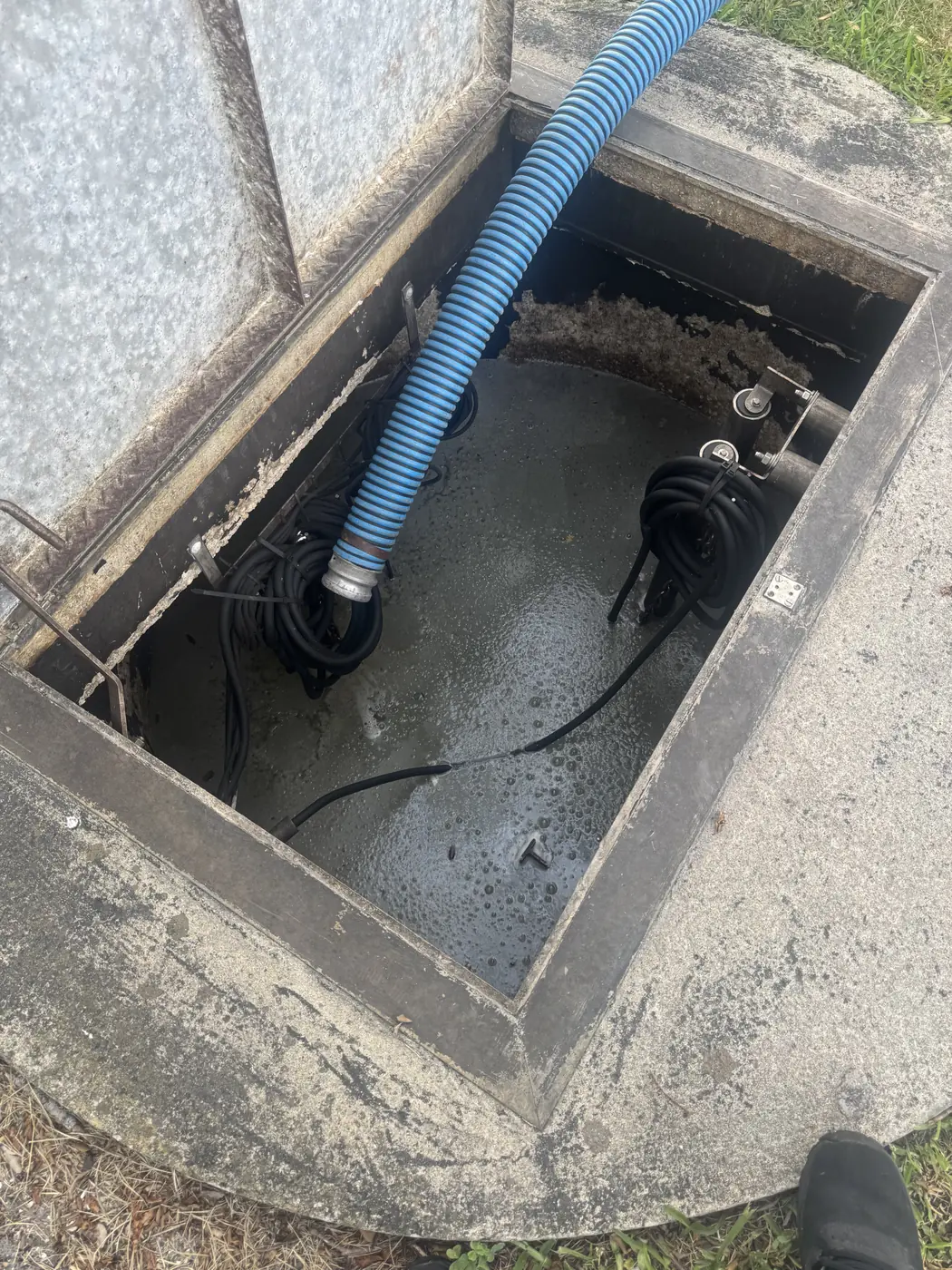
- Wet well and pump tank pump-outs with our own vacuum trucks
- Hydro-jetting and camera inspection of the gravity sewer line into the station
- Excavation for buried tanks, pump chambers and pipe
What a lift station is and who has one
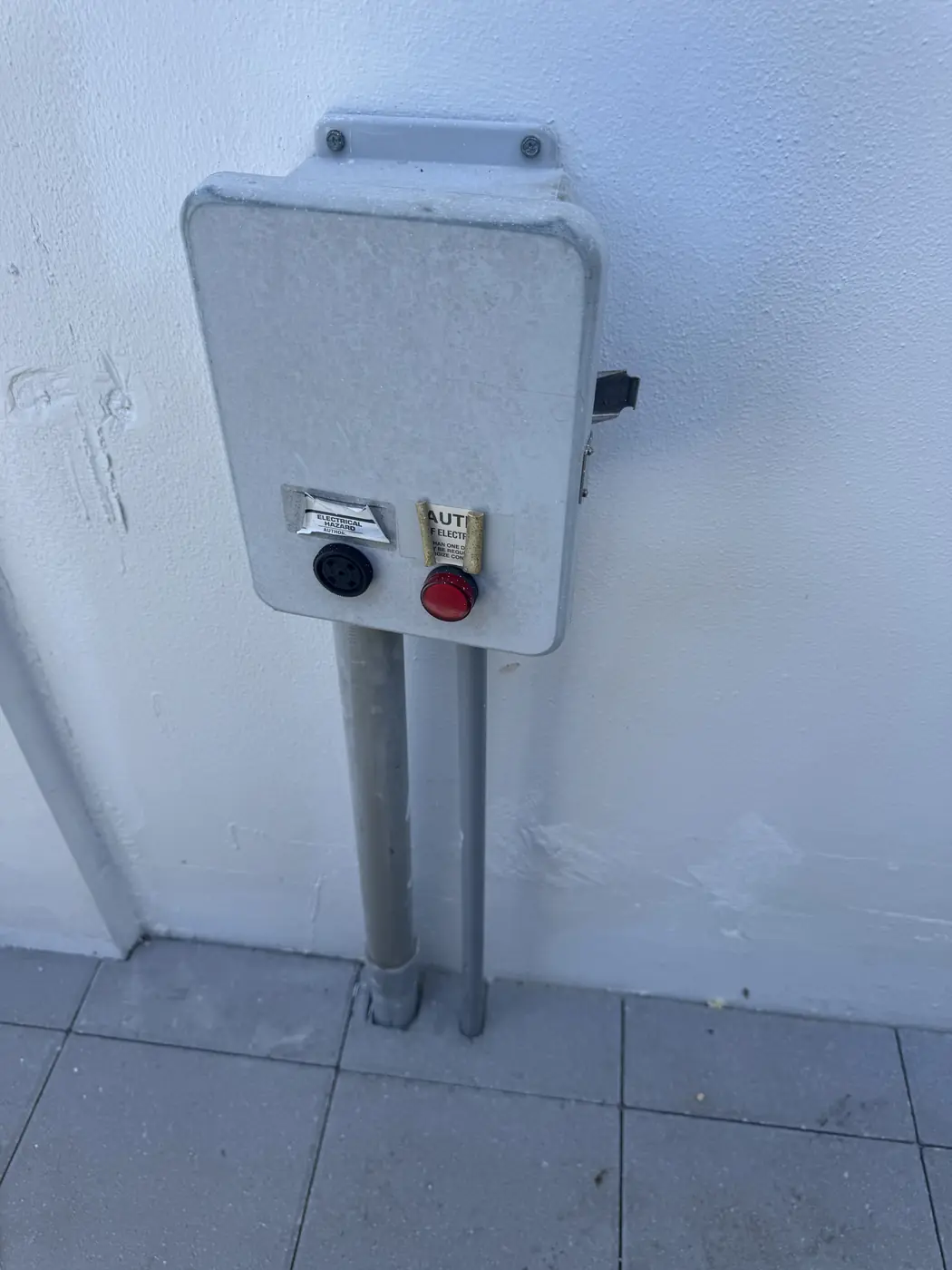
A lift station is a tank with a pump inside. It moves sewage or septic effluent to a place gravity can't take it. At a house you usually see a lid in the yard and a control box with an alarm light nearby. In the Loxahatchee River District's standard layout, the pump sits in a 3-foot-diameter fiberglass wet well and the control panel carries a red alarm light.
Several kinds of property in northern Palm Beach County rely on one. Seacoast Utility Authority and the Loxahatchee River District both run low-pressure sewer systems where each home has its own grinder pump station. Seacoast's service area covers Palm Beach Gardens, North Palm Beach, Lake Park, Juno Beach and parts of unincorporated Palm Beach County.
- Grinder pump stations on Seacoast Utility Authority low-pressure sewer systems, plus owner-side piping on Loxahatchee River District systems
- Septic pump tanks that dose a mound or pressure drainfield
- Lift dosing tanks, used when the septic tank sits too low to drain to the drainfield by gravity
- Sewage ejector pits for fixtures that can't drain by gravity
- Private lift stations serving HOAs, condo communities and commercial properties
Warning signs your pump system needs service
The high-water alarm is the obvious one. Florida's septic rules require an audible and visible high-water alarm on pump tanks, mounted where the people using the system can see it. A float near the top of the tank trips the alarm when the water reaches it.
Most problems show up before the alarm does. Pump manuals tie these symptoms to their usual causes:
- Pump runs often in short bursts: a float switch set wrong, a check valve that is missing, stuck open or leaking, or (on pressure sewer hookups) a faulty curb-stop check valve
- Pump runs but moves water slowly: a partly closed or clogged gate valve, or a blocked line
- Pump won't start: a tripped breaker or blown fuse, a blocked or failed float switch, a jammed impeller, loose wiring or a tripped thermal overload
- Alarm that keeps coming and going: heavy water use can trip it briefly, but repeated alarms mean a part could be wearing out or not working properly. Have it checked before the alarm stays on.
- Sewage odor near the tank, or slow, gurgling drains in the house: the tank may be running high or a line may be partly blocked. Grease and debris are common causes, and they also shorten pump life.
- Uneven run times between pumps on a multi-pump station: a bad pump, float or control
What to do when the high-water alarm goes off
The alarm means the water in the tank is higher than it should be. Florida's 1981 low-pressure sewer design guidelines assume about 50 gallons of reserve between the alarm float and the overflow in a home grinder unit. Yours may hold more or less. Every gallon you send down a drain uses up that margin.
When the power is out, a grinder pump can't run, so the reserve space in the tank is all you have. The Loxahatchee River District asks low-pressure sewer customers who lose power for an extended time to let no water go down drains, and to call the District at (561) 747-5708 to schedule a pump-out once the weather improves.
- Stop using water. No showers, laundry, dishwasher or flushing.
- Press the silence button if your panel has one. That quiets the horn but does not fix the problem.
- Look in your main house electrical panel for a tripped breaker labeled for the pump or alarm. If one is tripped, reset it once. If it trips again, leave it off and call. Keep the outdoor pump control panel closed. Don't touch it, or any breaker, if the panel, the ground around it or your hands are wet.
- Give it about 15 minutes. If the alarm hasn't cleared, call for service: Loxahatchee River District customers call the District at (561) 747-5708 (it maintains District pump stations at no additional charge), and everyone else calls LCI at (561) 970-9282. Don't wait if sewage is coming up in a drain or out of the tank lid. Call right away.
- Do not open the wet well lid, reach into the tank or climb in. The sewage gases inside, including hydrogen sulfide, are toxic.
What LCI does on a lift station call
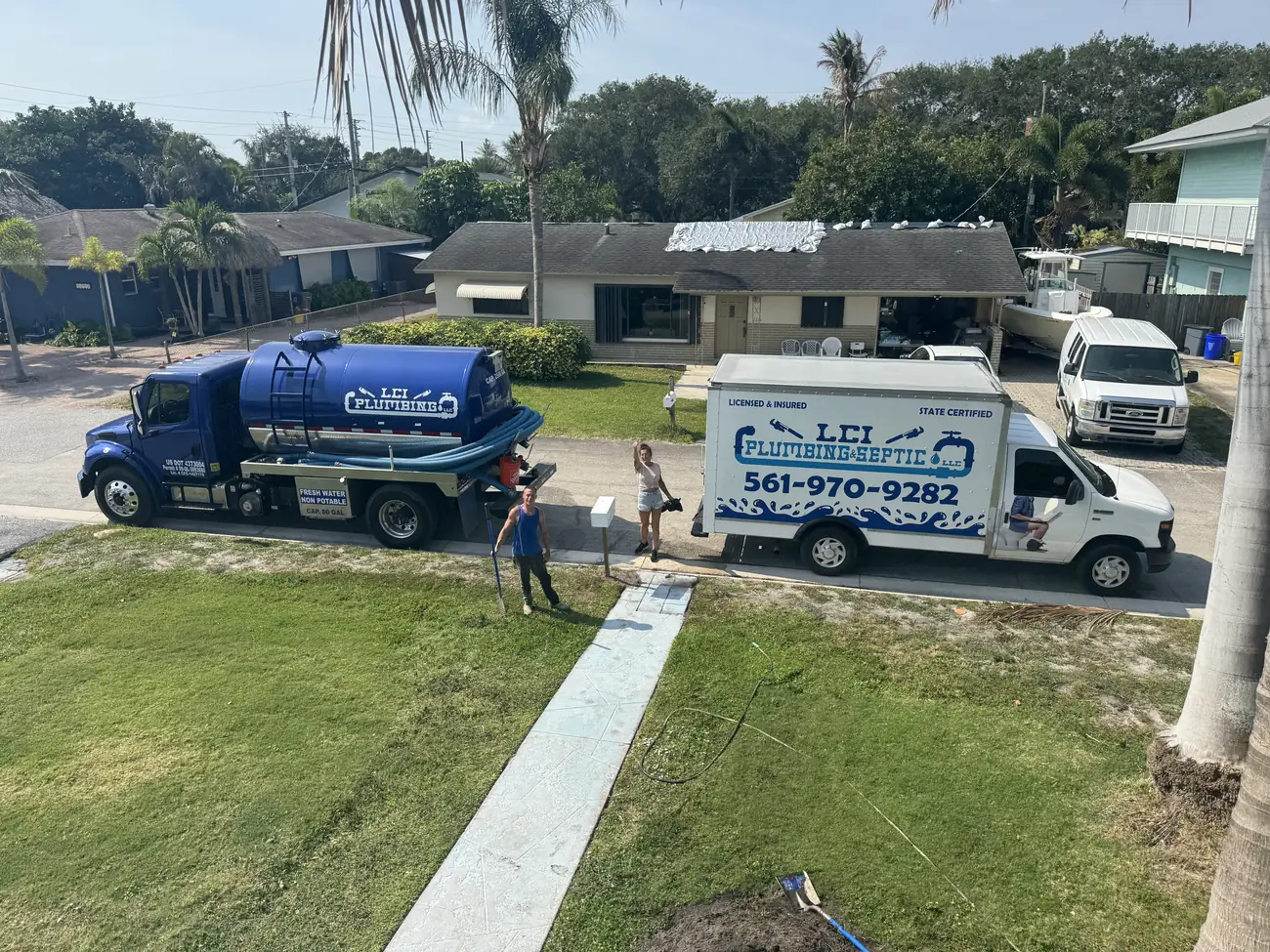
LCI Plumbing & Septic is a Florida Certified Plumbing Contractor (CFC1427175). We own our vacuum pump trucks, hydro-jetters, drain cameras and excavators. That means we can pump down a full wet well, clean it, look inside the lines and dig to a buried problem without waiting on another company.
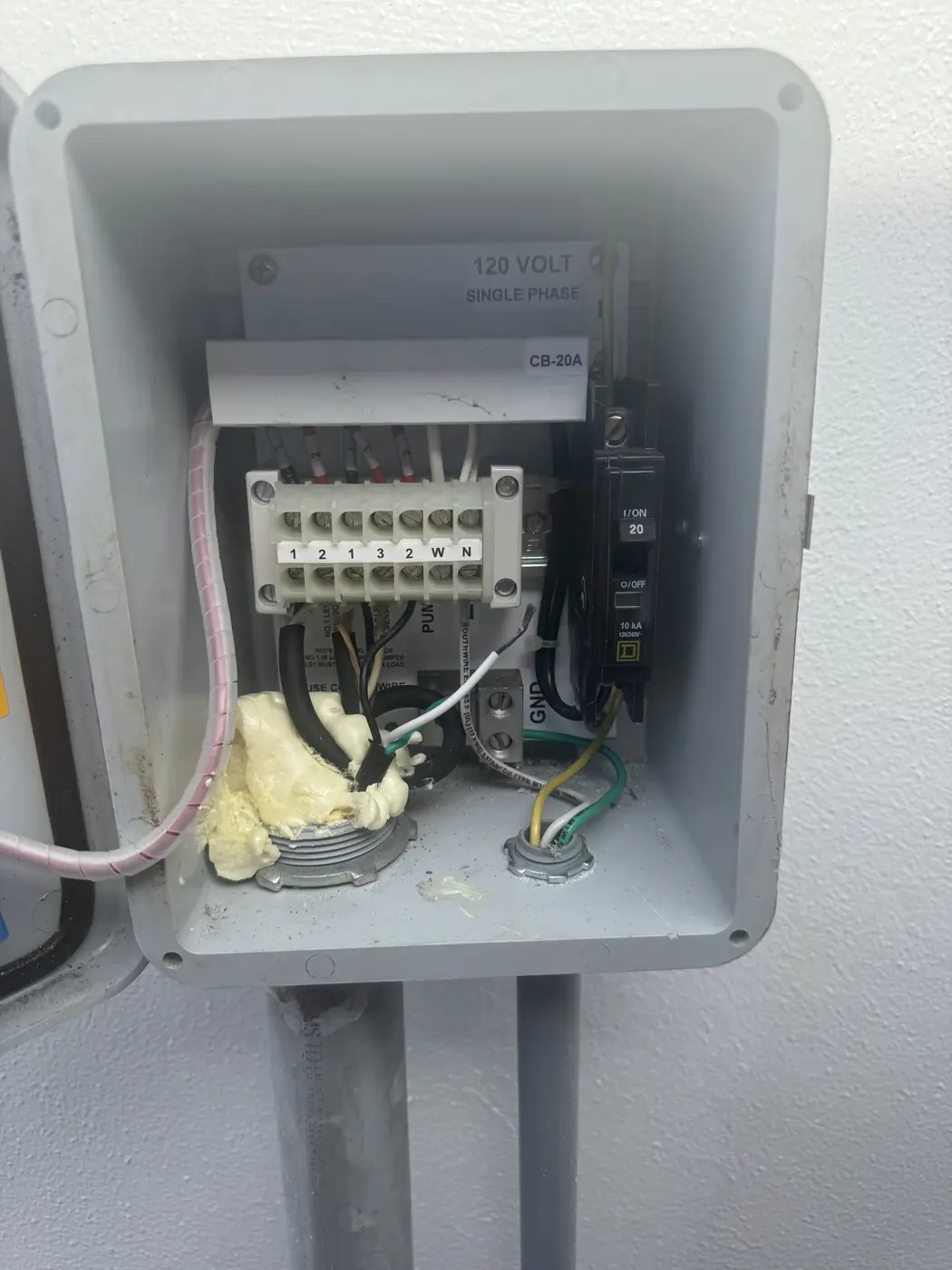
We test floats, alarms and controls, and we replace failed pumps, floats, check valves and alarms. EPA's pressure sewer fact sheet notes that most service calls on these systems trace to electrical control problems or pump blockages.
Sewage ejector pits have their own code requirements. The 2023 Florida Building Code, Plumbing calls for a check valve and a full-open valve on the discharge, both accessible, plus a gas-tight removable cover and a vent on the pit.
- Station inspections: pumps, floats, check valves, alarm and control panel
- Grinder, effluent and sewage ejector pump replacement. On guide-rail stations, the pump lifts out without disconnecting the discharge piping.
- Float switch cleaning, testing and replacement
- Check valve, curb-stop check valve and gate valve repair
- High-water alarm and control troubleshooting
- Wet well and pump tank pump-outs with our own vacuum trucks, including grease and debris removal
- Hydro-jetting and camera inspection of the gravity sewer line from the building into the station
- Excavation for buried tanks, pump chambers and pipe
- Live 24/7 dispatch at (561) 970-9282
Residential pump stations vs. HOA and commercial lift stations
At a house, who maintains the station depends on the utility. Under Seacoast Utility Authority's low-pressure sewer agreement, the homeowner owns the grinder station and is solely responsible for its operation, maintenance, repair and replacement. Seacoast also requires you to keep a maintenance and service agreement at all times with a firm that is experienced with wastewater pumping and acceptable to Seacoast. The agreement must cover regular maintenance and 24-hour emergency response and give a 24-hour toll-free contact number, and Seacoast asks for proof every year. Without one, you risk water and sewer disconnection. Seacoast's low-pressure sewer agreement runs with the title, so you have to tell buyers about it.
The Loxahatchee River District splits it differently. Under its maintenance license, the District inspects, operates, maintains and replaces the pump station as necessary, and provides maintenance service on it at no additional charge. The owner is responsible for the pipe and electrical on the property, and pays to replace the station if it is damaged through the owner's fault.
Private stations at HOAs and commercial sites fall under DEP's Chapter 62-604, which applies to public and private collection systems alike. Owners must keep an operation and maintenance manual with an emergency response plan for hurricanes and severe storms, update that plan every year, and run the system to prevent sewer overflows. Rule 62-604.500 also requires every pump station, old or new, to be operated and maintained with the emergency pumping, lightning and surge protection, and fencing and signage features set out in Rule 62-604.400. Other 62-604.400 standards, such as flood protection, are design rules for new stations.
- Emergency pumping capability. Most stations can meet it with a generator connection, portable pumping equipment or two independent utility substations. Stations that take force-main flow from other stations, or discharge through pipe 12 inches or larger, need an in-place emergency generator.
- A force-main riser with rapid-connect fittings and valving for portable pumps
- Lightning and surge protection, phase protection, and a fence or other features that keep out people and animals, plus a weather-resistant sign with an emergency contact phone number
- For new stations, and for replacements that need a permit: electrical and mechanical equipment protected from physical damage by the 100-year flood, with the station designed to stay fully operational and accessible in a 25-year flood (local conditions may allow less, but never below a 10-year flood).
- Spill reporting: spills over 1,000 gallons, or any spill that may endanger health or the environment, go to the State Watch Office at (800) 320-0519 within 24 hours, plus a public notice to DEP. Smaller spills are reported to DEP within 24 hours. A written report follows within five days.
- Before replacing a station: under Rule 62-604.600(2)(a), even a same-capacity replacement at the same location needs a DEP permit if the station doesn't meet the design requirements in 62-604.400(2)(a)-(e): emergency pumping, surge protection, odor and noise control, fencing and signage, and flood protection.
Septic pump tanks and dosing for mound and pressure drainfields
In inland septic communities like Jupiter Farms, The Acreage, Loxahatchee, Wellington and Palm Beach Country Estates, not every system drains by gravity. DEP's Septic System Owner's Guide notes that some systems need extra tanks and pumps to move partially treated sewage to the drainfield.
Florida rule 62-6.014 requires low-pressure dosing from an automatic dosing device when the required drainfield area is more than 1,000 square feet or when the system is designed for low-pressure dosing. A drainfield of 1,000 to 2,000 square feet can instead be split into two equal halves that are lift-dosed alternately. Low-pressure dosing feeds a network of 2-inch or smaller PVC with holes 1/2 inch or smaller, and those rules apply to beds and trenches, including mound and filled systems. When the septic tank sits too low for gravity flow, the rule calls for lift dosing: a pump tank lifts effluent to a header pipe or distribution box.
Pump tanks have their own construction rules under 62-6.013. The pump sits in a separate compartment or tank, and pump levels are set low enough to leave reserve space in case the pump fails. These rules used to be the Department of Health's Chapter 64E-6; Florida's septic program moved to DEP on July 1, 2021, and county health department staff still handle permits and inspections under DEP direction.
- Effluent pump and float replacement
- Alarm testing. An outdoor alarm must be waterproof and rated by the manufacturer for outdoor use.
- Pump chamber pump-outs with our own vacuum trucks
- Jetting and camera inspection of the lines between the tank, pump chamber and drainfield
- Two-pump commercial dosing systems (required over 500 gallons per day of sewage flow): checks on both pumps
How often to service a lift station or grinder pump
EPA's 2002 pressure sewer fact sheet says annual preventive maintenance is typical for grinder pumps, and estimates 4 to 10 years between unplanned repair calls for a quality installation. The schedule below comes from EPA guidance, DEP's owner guide and pump manufacturer manuals.
Don't flush wipes of any kind (including "flushable" ones), diapers, sanitary products, kitty litter or seafood shells, and don't pour grease or cooking oil down drains. Keep the station clear: Seacoast allows no trees or shrubs within 6 feet of the pump station or service line, and the Loxahatchee River District requires a 36-inch clear zone free of fencing and landscaping.
- Home grinder station: a preventive check once a year
- HOA or commercial station with two or more pumps: quarterly checks of pump wear and corrosion, float movement, check valves, run-time balance and the control panel for moisture or loose connections
- Commercial station basin: inspect and clean once a year
- Septic tank with a pump chamber: inspect and pump every 3 to 5 years
- STEP (septic tank effluent pump) systems: pump the septic tank every 2 to 3 years
- Any station: clear grease and debris as needed, before it fouls the floats
Recent septic work
FAQ
Lift Station Service: common questions
My lift station alarm is going off. What should I do?
Stop using water right away. Check your main house panel for a tripped pump or alarm breaker and reset it once; if it trips again, leave it off. Keep the outdoor control panel closed. If the alarm hasn't cleared in about 15 minutes, Loxahatchee River District customers should call the District at (561) 747-5708, and everyone else can call LCI's 24/7 dispatch at (561) 970-9282. Call right away if sewage is backing up into the house. Don't open the wet well or reach into the tank, because the sewage gases inside, including hydrogen sulfide, are toxic.
Can I keep using water while the alarm is on or the power is out?
No. Stop using water until the alarm clears or the power comes back. A home grinder unit may hold only about 50 gallons between the alarm float and the overflow, and the pump cannot move wastewater without electrical power. The Loxahatchee River District asks low-pressure sewer customers in long outages to let no water go down drains and to call (561) 747-5708 for a pump-out once the weather improves.
Who is responsible for maintaining a private lift station?
It depends on the system. Seacoast Utility Authority homeowners own their grinder station, are solely responsible for it, and must keep a service agreement with a firm Seacoast accepts that includes 24-hour emergency response. Under the Loxahatchee River District's maintenance license, the District maintains the pump station and the owner handles the pipe and electrical, so call the District first for pump or alarm problems. HOA and commercial owners are responsible for their own stations under DEP's Chapter 62-604, which covers private systems.
How often should a lift station be serviced?
For a home grinder pump, EPA describes annual preventive maintenance as typical. Liberty Pumps' commercial grinder manual calls for quarterly checks on multi-pump stations and a basin inspection and cleaning once a year. A septic tank with a pump chamber should be inspected and pumped every 3 to 5 years, according to DEP.
What is the difference between a grinder pump, a sewage ejector and an effluent pump?
A grinder pump chops solids into a slurry and pushes it through 1-1/4 to 2 inch pipe over long distances, which suits low-pressure sewer systems. A sewage ejector passes solids up to 2 inches through 2 to 3 inch pipe over short runs. An effluent pump sits in a septic pump tank and moves partially treated sewage to the drainfield. A grinder pump generally isn't recommended ahead of a septic tank, because it grinds solids so finely that they can't settle out in the tank, and settling is how a septic system works.
Why does my pump keep turning on and off?
Frequent cycling can point to a check valve that is missing, stuck open or leaking, or to a float switch that is set wrong. On pressure sewer hookups, a faulty curb-stop check valve can cause the same thing. On a multi-pump station, run times that don't match between pumps point to a bad pump, float or control. We test the valves, floats and controls and replace the failed valve, float or pump.
Sources
- 1.Fla. Admin. Code R. 62-6.013, Construction Materials and Standards for Treatment Receptacles (Cornell LII)
- 2.Fla. Admin. Code R. 62-6.014, Construction Materials and Standards for Drainfield Systems (Cornell LII)
- 3.Fla. Admin. Code R. 64E-6.013, transfer note (Cornell LII)
- 4.Florida DEP, Onsite Sewage Program Transfer
- 5.Florida DEP, Septic System Owner's Guide
- 6.Fla. Admin. Code R. 62-604.100, Collection Systems and Transmission Facilities (Cornell LII)
- 7.Fla. Admin. Code R. 62-604.400, Design/Performance Considerations (Cornell LII)
- 8.Fla. Admin. Code R. 62-604.500, Operation and Maintenance (Cornell LII)
- 9.Fla. Admin. Code R. 62-604.550, Abnormal Events (Cornell LII)
- 10.Fla. Admin. Code R. 62-604.600, permit requirements (Cornell LII)
- 11.Seacoast Utility Authority, Low Pressure Sewer Lift Station Maintenance Agreement
- 12.Seacoast Utility Authority, About Us
- 13.Loxahatchee River District, License for Maintenance of Low Pressure Sewer System Pump Station
- 14.Loxahatchee River District, Application/Installation Procedures for Low Pressure Pumping Units (Simplex)
- 15.Loxahatchee River District, Severe Weather
- 16.U.S. EPA, Wastewater Technology Fact Sheet: Sewers, Pressure (EPA 832-F-02-006, 2002)
- 17.Florida DER/DEP, Design and Specification Guidelines for Low Pressure Sewer Systems (June 1981)
- 18.Liberty Pumps, Installation Manual 7594000 (Omnivore 3-5 hp Grinder Pumps)
- 19.Liberty Pumps, Installation Manual 7386000 (Simplex Grinder Systems)
- 20.Environment One Grinder Pumps, Homeowner Operation & Maintenance Manual
- 21.2023 Florida Building Code, Plumbing, Chapter 7, Section 712 (ICC)
- 22.Ferguson, Sewage Pumps vs. Grinder Pumps
So nice to have a company that actually knows what they are doing. Had two companies come to find my septic tank with no luck. Joel able to find the tank in five minutes. My tank was serviced and my drain field rejuvenated. Couldn’t have asked for a better service.
Heard about LCI Plumbing through a family friend who had their drain field redone and septic tank replaced and had a great experience. I ended up calling them for similar work and more, and they were just as professional as described. They responded quickly, explained everything clearly, and handled… Read moreHeard about LCI Plumbing through a family friend who had their drain field redone and septic tank replaced and had a great experience. I ended up calling them for similar work and more, and they were just as professional as described. They responded quickly, explained everything clearly, and handled the job efficiently from start to finish. Everything was completed properly and the area was left clean afterward. I’d definitely recommend them.
Chris and Heather have been amazing! Heather is so sweet and accommodating for scheduling. This is our second time using LCI. I receive constant updates regarding the appointment, updates when someone is on the way and Chris provides thorough explanations of what the problem is and how it’s being ad… Read moreChris and Heather have been amazing! Heather is so sweet and accommodating for scheduling. This is our second time using LCI. I receive constant updates regarding the appointment, updates when someone is on the way and Chris provides thorough explanations of what the problem is and how it’s being addressed. We used LCI for pumping our septic and jetting our plumbing lines after. Can’t go wrong with using LCI.
A selection of reviews from our Google profile. Read all of them on Google.
Where we work
Lift Station Service across Palm Beach County
Coastal Palm Beach County
Plumbing and septic for homes, condos and businesses along the coast.
Inland septic country
Large lots and private septic systems: the heart of our septic work.
Request service
Backed up, leaking or due for a pump‑out? Call LCI.
Live dispatch around the clock for Jupiter and Palm Beach County. Send the form for non-urgent work and we will call you back.
(561) 970-9282
- Live dispatcher 24/7, no call center
- Upfront price before work begins
- Licensed CFC1427175 · fully insured
Get a fast quote
Tell us what is happening and where.