The 3 to 5 year range and who recommends it
Florida DEP's Septic System Owner's Guide says to have the tank inspected and pumped every 3 to 5 years by a state-licensed septage disposal service. EPA gives the same pumping range and says a septic professional should inspect a household system at least every three years. UF/IFAS also says 3 to 5 years and notes that the timing varies with tank size, the number of people in the household and how much wastewater the home produces.
Some systems need checks more often than the range suggests. If your system has a pump, float switch or other mechanical parts, EPA says to have it inspected about once a year. Aerobic treatment units are held to a stricter standard. Florida rule 62-6.012 requires a current maintenance contract and at least two inspections a year for a residential unit.
What shortens or stretches the interval
EPA names four factors: household size, the total wastewater the house produces, the volume of solids in that wastewater, and the size of the tank.
Florida's sizing rule also matters. Under rule 62-6.008, a system permitted today needs at least 900 gallons of tank capacity for a typical 3-bedroom home, 1,050 gallons for 4 bedrooms and 1,200 gallons for 5 bedrooms, and a large home can be sized up based on its floor area. The rule's design flows assume no more than two people per bedroom. Older systems installed under earlier rules can be smaller. In Oregon State University Extension's table, five people on a 1,000-gallon tank come out at about 2 years between pump-outs. A family of five on a 900-gallon tank has less room than that, so a pump-out can be due in under 2 years, and sooner with a disposal. Have the sludge and scum measured to confirm.
Here is how each factor plays out, starting with Oregon State University Extension's pumping table:
- More people on the same tank. The table puts a 1,000-gallon tank at about 5.9 years between pump-outs for 2 people, 2.6 years for 4 people and 1.5 years for 6.
- Tank size. A bigger tank stretches the interval. With 4 people, the same table gives about 2.6 years on a 1,000-gallon tank, 3.4 years on 1,250 gallons and 4.2 years on 1,500 gallons.
- A garbage disposal. EPA says frequent disposal use significantly increases sludge and scum build-up. FDEP advises not using one, or limiting it, and having the tank checked more often than usual if you do.
- High water use. EPA says indoor use can run as high as 70 gallons per person per day, and one leaky toilet can waste up to 200 gallons a day. FDEP suggests spreading laundry over several days and fixing leaking faucets and toilets promptly.
- Softeners and hot tubs. EPA says some water softeners and purification systems send hundreds of gallons into the tank, stirring up solids and overloading the drain field. FDEP says to reroute softener backwash at least 15 feet from the tank and drain field. EPA also warns that draining a hot tub into the system stirs up solids and pushes them into the drain field.
What a full pump-out includes
LCI pumps tanks with its own vacuum trucks. When a backup comes from the line between the house and the tank, LCI also owns drain cameras to find the problem and hydro-jetters to clear clogs.
Florida rule 62-6.010 governs septic pumping, and EPA describes what the technician should check while the lid is off. A complete visit covers these points:
- Before the lid comes off, the company must hold a current annual operating permit from the state. Florida rule 62-6.010 bars anyone from pumping a tank without one.
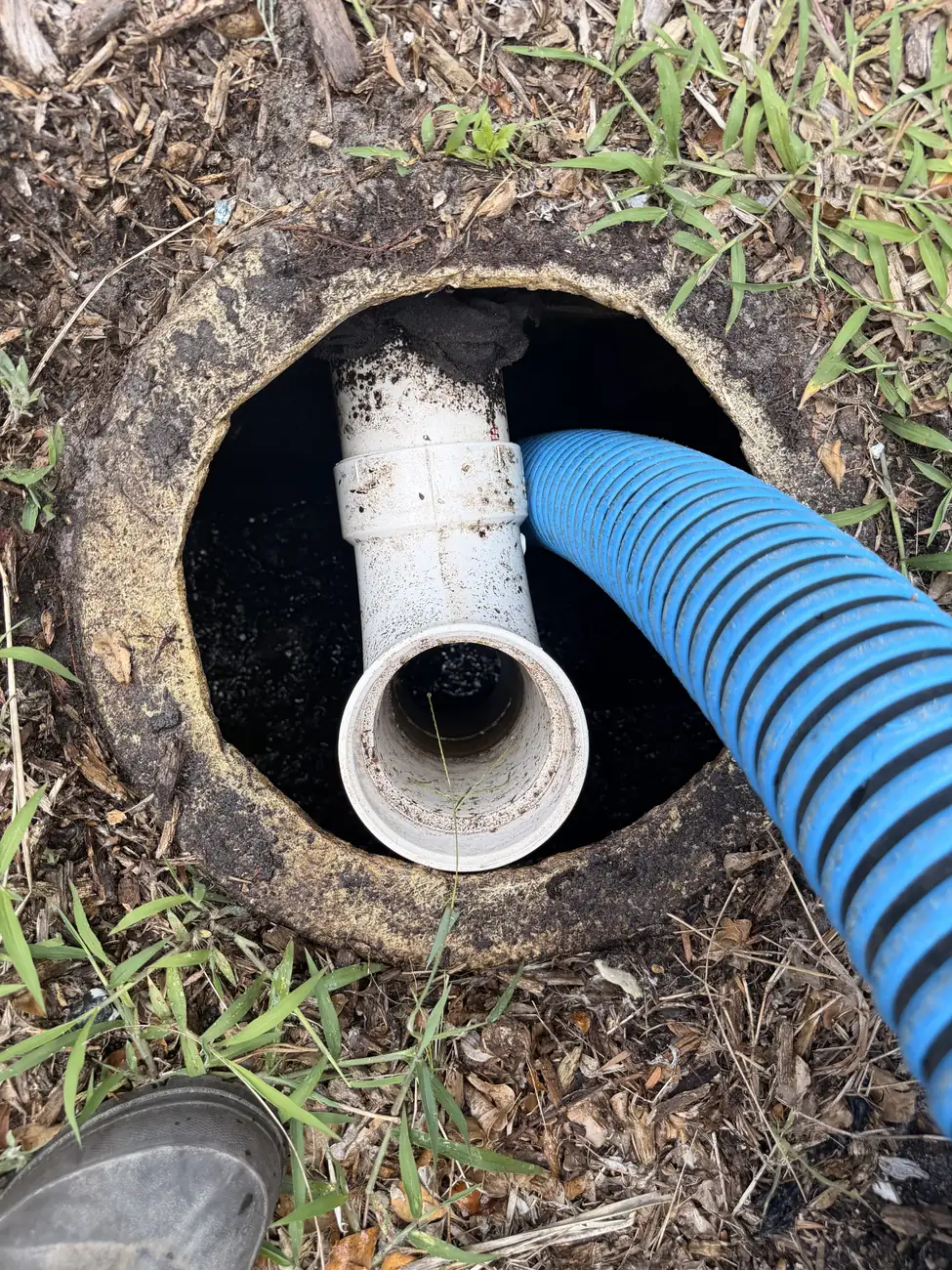
- The tank is opened through its lid, manhole or a sectional lid, not through the inlet or outlet pipe.
- The pumper removes the entire contents of the tank, including every chamber and any pump tank. If the pumper leaves material behind because a full pump-out could cause a problem with the system, rule 62-6.010 requires a written note to the owner giving the reason, the gallons pumped and what was left in the tank.
- The technician checks for leaks and measures the sludge and scum layers.
- The lid is sealed and secured, a broken lid is replaced, and the dig site is backfilled and compacted.
- The service report records the tank's condition and any repairs. Haulers also keep their own collection logs for five years.
Signs the tank is overdue
Besides the 3 to 5 year range, EPA gives a measurement test the technician can apply at each inspection. The tank needs pumping if any of these is true: the bottom of the scum layer is within 6 inches of the bottom of the outlet, the top of the sludge layer is within 12 inches of the outlet, or sludge and scum make up more than 25 percent of the liquid depth.
If sewage is backing up into the house, don't wait for a regular appointment. LCI runs live dispatch 24/7 at (561) 970-9282.
Between visits, watch for the warning signs EPA lists for a failing system:
- Water or sewage backing up from toilets, drains or sinks
- Tubs, showers and sinks draining very slowly
- Gurgling sounds in the plumbing
- Standing water or damp spots near or over the tank or drain field
- Sewage odors around the tank or drain field
- Bright green, spongy grass over the tank or drain field, even in dry weather
Why skipping pump-outs damages the drain field
EPA explains that the tank holds wastewater long enough for solids to settle to the bottom as sludge while oil and grease float to the top as scum. Compartments and a T-shaped outlet keep both layers inside the tank. When a tank is never pumped, EPA says solids may slowly migrate out and eventually clog the drain field. UF/IFAS says those solids can block the drain field pipes until wastewater backs up into the home and onto the property.
At that point the repair may mean replacing the entire drain field. On its Why Maintain Your Septic System page, EPA puts routine maintenance at $250 to $500 every three to five years and says repairing or replacing a malfunctioning conventional system can cost $5,000 to $15,000. Those are national figures, not Palm Beach County quotes. EPA also notes that a system in disrepair lowers property value.
Additives do not change this. EPA does not recommend additives for household systems, and its homeowner guide calls periodic pumping the only true way to make sure a septic system works properly.
Protect the drain field between pump-outs. FDEP asks owners to divert downspouts away from it, keep vehicles off it, plant only grass over it and never cover it without a permit.
After a storm, let the yard drain first
After heavy rain or a tropical storm, check the yard before you book a pump-out, especially in inland septic neighborhoods such as Jupiter Farms, The Acreage and Loxahatchee. Do not pump a tank while the yard or drain field is still flooded or saturated. EPA's flood guidance gives two reasons. Mud and silt can wash into the open tank and then into the drain field. An emptied tank in saturated soil can also float or pop out of the ground and damage its inlet and outlet pipes.
Until the ground drains, use as little water as possible. EPA warns that wastewater flushed while the soil is saturated will not be treated. If your system has a pump or lift station, stay away from its electrical panel and alarm until they are dry and have been checked.
Pump once the water has receded and the soil has drained. EPA then recommends pumping both the tank and any lift station to clear silt and debris. Keep trucks and equipment off the drain field, because wet soil compacts easily. The one exception to waiting is sewage backing up into the house. In that case, call LCI's 24/7 line at (561) 970-9282.
Clean the outlet filter at every pump-out
Under Florida rule 62-6.008, systems permitted today must have an approved outlet filter in or after the last tank compartment, placed where it can be reached for routine maintenance. Older systems may not have one, so ask your pumper to check. FDEP warns that a clogged or damaged filter can cause the system to fail, and EPA says filters may need frequent maintenance.
Polylok's sheet for its PL-122 filter says to clean it at every pump-out or at least every three years, and other models should be cleaned according to their manufacturer's instructions. Ask your pumper to pull and rinse the filter at every pump-out, with the solids washed back into the tank and no water used in the house until the filter is back in. If you do it yourself, wear gloves, keep children and pets away, never lean into or climb into the tank because septic tanks hold toxic gases, and secure the lid before you walk away.
Keep a pumping log to set your own interval
Start with your permit. DEP has run Florida's septic program since July 1, 2021, but the Florida Department of Health in Palm Beach County still handles septic permits and inspections, and FDEP notes the county office may have a copy of yours.
After two or three pump-outs with measurements, you can see how fast your household builds up solids and set the interval from your own numbers. FDEP also notes that good maintenance records can be a selling point for the property. Keep a log with:
- Date of each service and the work done
- Company, pumper's name and cost
- Tank size in gallons, from the permit or the pumper
- Sludge and scum levels at each pump-out
- A photo of the tank location, with the spot marked, taken while the tank is open