What a flood does to a septic tank and drain field
A drain field needs a layer of unsaturated soil beneath it. Wastewater leaves the tank and soaks down through that soil. UF/IFAS Extension notes that flooding shrinks that unsaturated layer, so the system treats wastewater less effectively, drains slowly and is more likely to back sewage up into the house. Florida rule 62-6.006 requires the wet-season water table to sit at least 24 inches below the bottom of the drain field, and a storm that pushes groundwater up can erase that separation.
EPA says most tanks are not damaged by flooding because they are below ground and fully covered, though tanks and pump chambers can fill with silt and debris that has to be cleaned out by a professional. The Lake Worth Drainage District says slow drains in a septic home after heavy rain may signal a problem with too much groundwater.
During Tropical Storm Isaac in 2012, up to 14.85 inches of rain fell from August 25 to 28 in the C-51 Basin, the area drained by the C-51 canal in central Palm Beach County, bringing the seven-day total to about 17 inches. The county health department then warned septic owners in The Acreage, Loxahatchee Groves and Wellington's equestrian areas, where many tanks and drain fields were under water.
Before the storm: steps that limit damage
UF/IFAS Extension and Florida DEP recommend these steps when a hurricane is forecast:
- Cut household water use in the days before the storm.
- Do not book a pump-out right before the storm. A freshly emptied tank is the one most likely to float if the ground floods, the same risk EPA cites when it warns against pumping in saturated ground.
- Seal the tank's manholes and inspection ports.
- If your system has a pump, make sure its outdoor electrical components, including the control panel and alarm, are waterproofed and rated for outdoor use, and turn the pump off at the circuit breaker before the area floods. While it is off, use as little water as you can, because the pump chamber has nowhere to send it.
- Point gutters and downspouts away from the tank and drain field. DEP warns that too much water there can cause the system to fail.
- If flooding is expected to last several days, set up a 5-gallon bucket toilet lined with a heavy-duty trash bag and stop using toilets and faucets while the ground is flooded. The City of Palm Beach Gardens says not to add kitty litter, because it cannot be flushed once the system is working again.
While the ground is saturated: use as little water as possible
EPA advises cutting household water use sharply during flooding and not using the system until the drain field is no longer under water. It also says to keep cars, trucks and equipment off the drain field, because saturated soil compacts easily, which can reduce how well it treats wastewater. UF/IFAS adds that floodwater you mop up indoors should not be poured into sinks or toilets, because in most homes all of it ends up in the septic system.
Florida Department of Health guidance notes that a septic system run by a dosing pump, aerator or grinder pump will not work without electricity: a pump cannot move wastewater, and an aerobic unit stops treating it. Keep water use to a minimum until power returns, or the tank can overflow and push sewage back into the house. Jupiter-area homes on Loxahatchee River District low-pressure sewer (not septic) have their own instructions: if the power is out for an extended period, do not let any water go down the drains, and call the district at (561) 747-5708 to schedule a pump-out of the unit once the weather improves.
The district's water-saving tips work for septic homes too:
- Wash dishes in a dishpan and dump the water outside, away from the drain field and any well.
- Flush only when necessary and keep showers brief.
- Do not run the washing machine or dishwasher.
Why to wait before pumping a flooded or saturated tank
In saturated ground, an empty tank is at more risk than a full one. EPA warns that pumping while the drain field is flooded or saturated can make the tank try to float out of the ground and may damage the inlet and outlet pipes. The Lake Worth Drainage District cautions that an exceptionally high water table can crush a tank that was pumped dry. UF/IFAS also notes that opening the tank while the soil is saturated lets silt and mud in, which then ends up in the drain field and slows its drainage.
The time to pump is after the water has receded and the soil has drained. At that point, EPA recommends pumping both the septic tank and any lift station as soon as possible to clear out silt and debris that washed into the system. The one reason not to wait is sewage backing up into the house. In that case, call right away.
Septic pumps, alarms and electrical safety
Systems with a lift station or dosing pump add an electrical hazard. Florida rule 62-6.013 requires these systems to have a separate pump chamber and a high water alarm the household can see and hear. That means the system has wiring, a control panel and an alarm near the tank, and any of them may have been under water.
Before power goes back to that equipment:
- Leave pump and alarm parts alone until they are completely dry, and have a licensed electrician or septic contractor check the connections before the power goes back on.
- Never turn a breaker on or off while standing in water. If you would have to stand in water to reach the panel, leave it and call an electrician.
- Have a licensed electrician inspect any wiring, receptacles or equipment that was submerged. FEMA says wiring that touched salt water usually has to be removed and replaced, so tell the electrician if storm surge or tidal water reached the equipment.
- Do not enter a flooded or wet building while the power is on, treat every downed power line as live, and report it to 911 or to FPL at (800) 468-8243 (1-800-4OUTAGE).
- If the high water alarm sounds after power returns, stop using water and call a septic contractor. The alarm means the pump chamber is filling faster than the pump can empty it, either because the pump has failed or because groundwater is getting in.
Cleanup and private wells
If sewage reached floors or other surfaces, Florida Department of Health guidance advises washing them with soap and water, then disinfecting with 1/4 cup of bleach per gallon of water. Never mix bleach with ammonia cleaners. Wear rubber gloves and boots, keep children and pets out of the area, and throw out sewage-soaked items that cannot be cleaned, such as carpeting and mattresses.
If your property also has a private well that flooded, do not drink the water until it has been tested for total coliform and E. coli. Call Florida Health Palm Beach County at (561) 840-4500 to learn how to sample it. Until results come back, use bottled water, boil water at a rolling boil for one minute, or add 8 drops (about 1/8 teaspoon) of unscented 6 percent household bleach per gallon (6 drops if the label says 8.25 percent), stir and let it stand 30 minutes.
The county's flood sheet also walks through disinfecting the well itself. Follow it step by step. The steps include turning off and draining the hot water heater, because bleach is not effective in water above 105°F. After disinfecting, have the water tested again to confirm it is safe to drink. Bleach kills germs but does not remove chemical contamination, so ask the health department about chemical testing if floodwater may have carried chemicals into the well.
Signs of damage and when to call a septic contractor
UF/IFAS recommends having a septic professional inspect the system as soon as possible once the floodwater recedes, and warns against working on it yourself because tanks may contain toxic gases. Call right away for sewage backing up into the house or a pump alarm that will not stop.
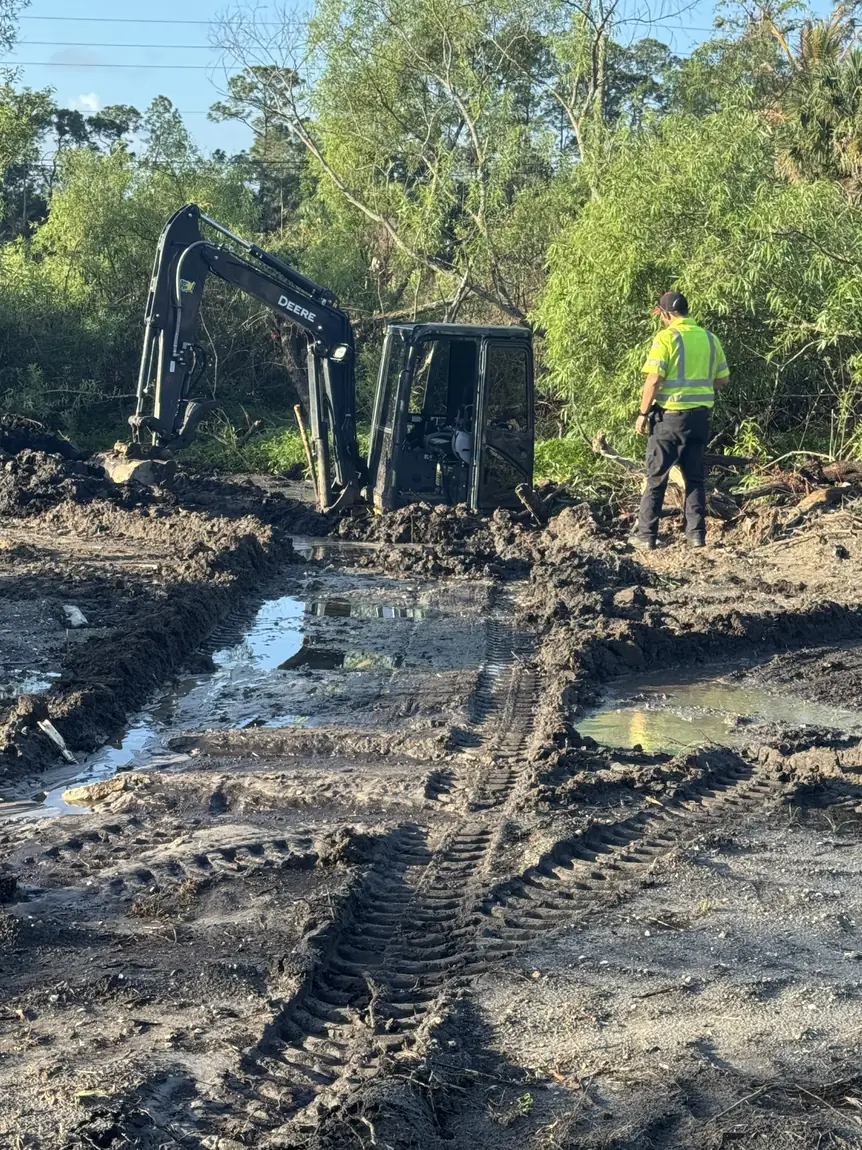
LCI Plumbing & Septic (Florida Certified Plumbing Contractor CFC1427175) dispatches 24/7 at (561) 970-9282. LCI runs its own vacuum pump trucks, drain cameras and excavators, so it can pump the tank and lift station once the soil has drained, inspect the lines with a camera if drains stay slow, and dig out a damaged tank or drain field for repair.
Once the yard dries, call for an inspection if you notice any of these signs, which EPA and UF/IFAS list:
- Ground over the tank that has settled or sunk. Keep people, pets and vehicles off that spot until it is checked, because it can mean a cracked lid or a collapsed tank.
- A system that will not accept water, or wastewater backing up into household drains.
- A drain field that stays soggy after the rest of the yard has dried.
- A foul odor that lingers around the tank and drain field or comes back into the house.
Repair permits and FEMA aid
Repairs to a failing system need written approval before work starts, and repair permits are valid for 90 days. Florida's septic program moved from the Department of Health to DEP (Chapter 62-6) on July 1, 2021, but in Palm Beach County that approval still comes through county health department staff, who handle septic permits and inspections for DEP.
FEMA help depends on the storm. When a federal disaster declaration includes Individual Assistance for Palm Beach County, as it did after Hurricane Ian in 2022, FEMA may reimburse the cost of a licensed technician's repair estimate and help pay to repair or replace a disaster-damaged septic system or well. Homeowner's insurance typically does not cover that damage. If you apply for FEMA aid after a future storm, tell the inspector you have a septic system or well.