Warning signs in the yard and in the house
Florida DEP's Septic System Owner's Guide explains that the tank holds back solids, grease and oil, and the liquid leaving it spreads across the drain field and filters down through the soil, which does most of the treatment. When that soil stops accepting water, the liquid shows up in the yard or in your drains. EPA and UF/IFAS list these signs:
- Soft, wet or spongy soil over the drain field when there has been no real rain.
- Standing water or damp spots near the tank or drain field.
- Sewage odor around the tank and field, or from drains inside. EPA notes odor can also come from a vent pipe or the wind, so it is a reason to check the system, not proof of failure.
- Grass over the tank or field that stays bright green and lush in dry weather.
- Slow-draining tubs, showers and sinks, and gurgling plumbing.
- Sewage backing up into toilets, drains or sinks.
Why drain fields fail
EPA says most septic systems malfunction because of inappropriate design or poor maintenance. These are the causes a homeowner can usually trace. On systems with a pump tank, also treat an alarm as a same-day call: wastewater is not leaving the tank as it should, and the pump, float or field could be the cause.
- Skipped pumping. EPA and UF/IFAS both say that without pumping, solids from the tank can move into the drain field pipes and clog them.
- Too much water. EPA says one leaky or running toilet can add up to 200 gallons a day, and doing all the laundry in one day can flood the field.
- A high water table. UF/IFAS says a system cannot treat wastewater well when drain field soils are waterlogged, and heavy rain, storms, hurricanes and rising groundwater can all saturate the soil. EPA lists high groundwater among the site conditions behind hydraulic failures.
- Roof runoff. DEP says to divert downspouts and other water away from the tank and field, because too much water prevents proper treatment.
- Roots. DEP says tree and shrub roots can reach a drain field from long distances and clog it, so plant only grass over or near it.
- Vehicles. DEP and EPA both say not to drive or park over the tank or drain field, where the weight can crack lines and pack down the soil.
How a professional diagnoses the problem
Florida's repair rule, 62-6.015 of the Florida Administrative Code, lists what a repair application must document, which makes a good outline of a proper diagnosis: a site plan of the system, building, water lines, wells and anything blocking a new field; the tank size and the field's approximate size and elevation; how much waste goes into the system; the soil textures; the estimated water table in the wettest season; and a description of how the system is failing.
In practice the visit starts at the tank. The technician opens it, measures sludge and scum, and checks the inlet and outlet. A tank packed with solids or a damaged outlet device points to solids carryover. Then comes the field: locating the lines, probing the soil for saturation, and running a camera through the lines where there is access to look for roots, crushed pipe or clogging. Water use gets checked too. A running toilet or a softener draining into the system can overload a field that would otherwise work, and DEP says softener backwash should be rerouted at least 15 feet from the tank and drain field.
Repair or replace: what Florida allows
Rule 62-6.002 says pumping a tank, installing an approved outlet filter, replacing a broken lid and swapping mechanical or electrical parts with like kind are not repairs. A failed drain field is, and the options depend on why it failed:
- Root clogging. If removing the roots and replacing damaged material restores the system's design function, rule 62-6.015 accepts that as the repair once the work is verified.
- Hydraulic overload. For systems permitted on or after January 1, 1983, the original field can stay, but field has to be added so the total is 50 percent larger than originally permitted or meets current sizing rules, whichever is larger.
- Alternative repair methods. Florida allows some repairs that do not add or replace the field, such as high-pressure jetting of the lines or air injection alongside the field. DEP lists accepted products but says acceptance is not an endorsement of how well they work. These methods cannot be used when the field's absorption surface is within 6 inches of the wet season high water table; then the old field must be replaced.
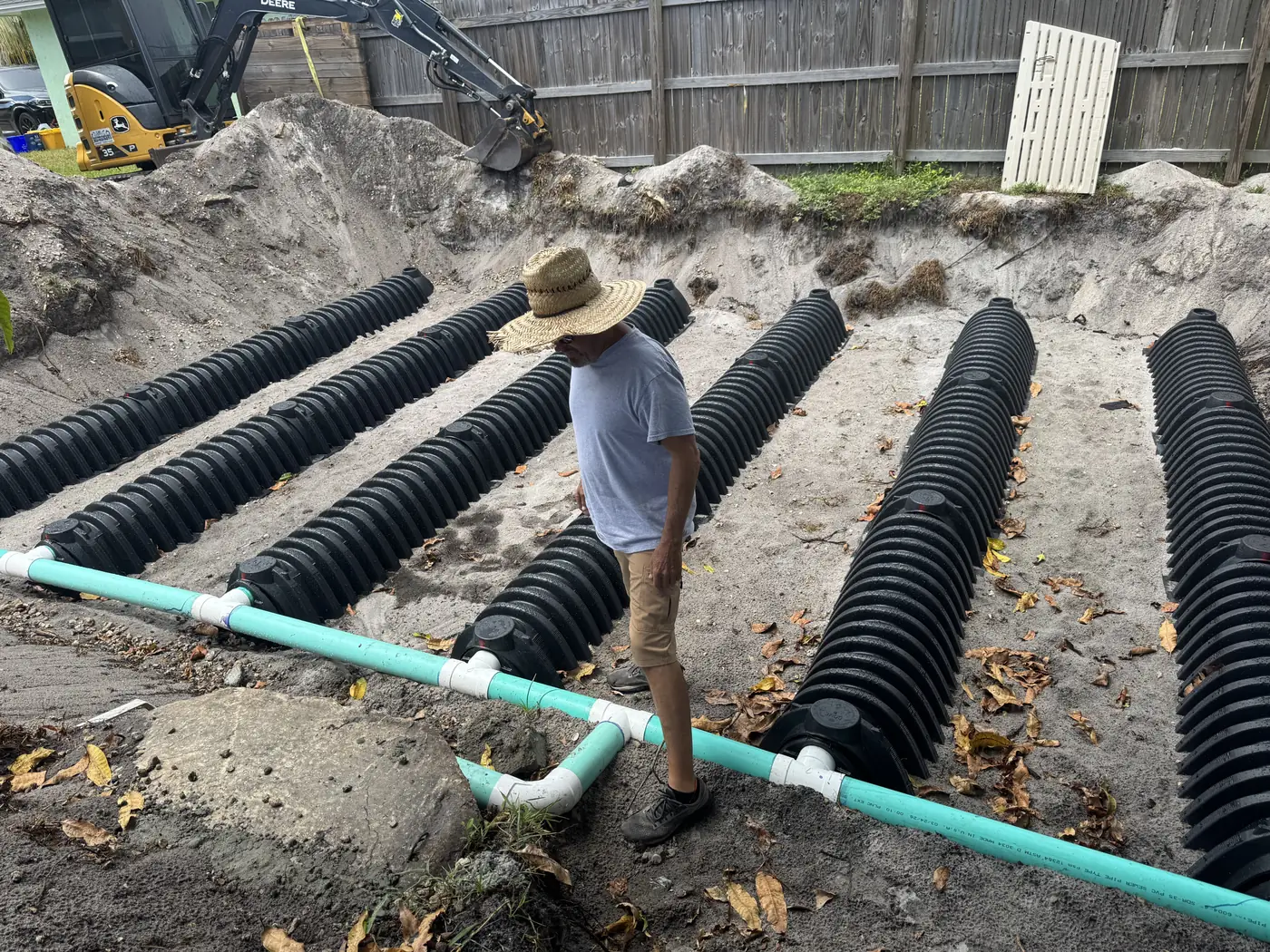
- Full replacement. Soil and aggregate dug out of the old field cannot be reused in the repair. For systems permitted since 1983, the rule's repair table lists 24 inches between the bottom of the field and the wet season high water table as the current requirement, with 12 inches as the absolute minimum. That separation is why some replacements sit higher than the old field.
- The tank. A structurally sound tank of adequate size can stay, but it must be pumped and fitted with a solids deflection device on the outlet.
Florida permit basics for a drain field repair
Rule 62-6.015 says the owner of a system that fails to work in a safe or sanitary manner must get a repair permit before the repair begins, directly or through an agent such as the contractor. Florida's septic program moved from the Department of Health to DEP in 2021, but DEP's permitting FAQ lists Palm Beach among the counties where permits are still issued by the county health department's Environmental Public Health Program.
The rule says the agency will make every effort to issue a repair permit within 2 working days of the application. The permit is good for 90 days, with one 90-day extension if the system is kept from creating a sanitary nuisance. Repairs must meet the setbacks in rule 62-6.005, or where they cannot, the absolute minimums in the repair table, and the finished work is inspected.
If sewage has backed up into the house, EPA says to avoid contact because it can carry harmful pathogens. Do not open a tank lid yourself or lean into an open tank. UF/IFAS says not to pump a tank while the soil is saturated, and if your property flooded and you have a drinking water well, ask the county health department about testing it.
Making a drain field last, and what LCI does on these calls
DEP and EPA recommend pumping every 3 to 5 years, and EPA says to inspect a household system at least every three years, or about yearly if it has a pump or float switch. Spread laundry across the week, fix leaks, keep downspouts and softener discharge away from the field, keep cars off it, and plant only grass over it. Our post on how often to pump a septic tank in Florida covers the schedule.
On a drain field call, LCI Plumbing & Septic pumps and inspects the tank with its own vacuum trucks, checks the lines with its own drain cameras, and gives you the findings and a price before work begins. LCI is a Florida Certified Plumbing Contractor (CFC1427175) and has served northern Palm Beach County for 32 years. Call (561) 970-9282; dispatch is live 24/7.